
Key takeaways
- Neck and shoulder discomfort together usually means the pillow fails at both ends. Compare five side sleeper pillows that address the pair head-on.
What's inside
As an Amazon Associate I earn from qualifying purchases. This post may contain affiliate links at no extra cost to you.
When neck and shoulder pain arrive together, they are usually one problem wearing two names. A side sleeper’s pillow has to do two jobs: cradle the neck at the right height and get out of the shoulder’s way. Fail the first and the neck bends; fail the second and the shoulder gets crushed upward into the neck, compressing the joint that is complaining. Treating one symptom at a time is how people end up with three pillows that each fix half the issue.
This view suits side sleepers who wake with a stiff neck and a sore top-of-shoulder, people whose shoulder gets pinned under a pillow edge, and anyone torn between contour, cutout and adjustable designs. The five below were picked from their Amazon listing names and specifications for how they handle both ends of the problem: a U-shaped cutout with latex, a firm cervical contour, an adjustable cutout you can tune, a cube profile for wide shoulders, and an adjustable shredded fill as the fallback.
Quick Picks
As an Amazon Associate we earn from qualifying purchases.
| Product | Best for | Key spec from title |
|---|---|---|
| Eli & Elm Side Sleeper Pillow | Cutout shape plus resilient latex support | U-shape cutout with cooling latex fill |
| Tempur-Pedic TEMPUR-Ergo Neck Pillow | Maximum neck contour from solid foam | Solid TEMPUR contour, firm, 4 inch medium profile |
| Coop Eden Cut-Out Pillow | A softer, adjustable shoulder notch | Gel memory foam cut-out, adjustable |
| Cube Memory Foam Pillow | Height that clears a broad shoulder | Solid cube profile, 24 x 12 x 6 inches |
| Coop Original Adjustable Pillow | Tuning height and softness by hand | Cross-cut foam fill with extra fill bag |
How to Choose
Shoulder clearance comes first
Before firmness or fill, check how the pillow treats the shoulder itself. A cutout or curved edge lets the shoulder slide into the pillow’s footprint instead of being folded under it, which removes the upward pressure that travels straight into the neck. Sleepers with wide or sensitive shoulders benefit most from a deep, defined notch. If a listing shows the shape, compare the cutout against your own shoulder: a shallow scallop is decoration, while a genuine channel changes how the whole upper body rests.
Neck support height and shape
With the shoulder accommodated, the neck needs a surface that keeps the head level rather than tipped. Contoured pillows raise a ridge under the neck and lower a bowl under the head, which suits sleepers who stay in position. Flat adjustable pillows reach the same line through height alone and forgive more movement. Either way, the correct height depends on shoulder width: broader frames need more fill between mattress and head. Mismatched height is the most common reason a well-reviewed pillow fails a particular sleeper.
Firmness at the contact points
Neck and shoulder comfort pull firmness in opposite directions, which is why this category is tricky. The neck generally wants support that does not collapse, while the shoulder wants the surface to yield where bone meets pillow. Resilient fills like latex split the difference by springing back under the neck yet giving at the edge. Gel memory foam blends lean softer and suit lighter pressure, while solid foam contours lean firmest. Think about which contact point complains loudest in the morning and weight your choice toward it.
Adjustability as insurance
Combined symptoms make the first guess less reliable, because fixing the shoulder can reveal a neck height problem that was hidden underneath. An adjustable pillow lets you respond to that discovery by adding or removing fill instead of starting the search again. Fixed shapes are simpler and hold their geometry perfectly, but they are a single bet. If you have already returned a pillow over fit, prioritise adjustability this time; if you know your measurements and sleep still, a moulded design is a perfectly reasonable commitment.
The 5 Best Options
Eli & Elm Side Sleeper Pillow

This pillow attacks both symptoms with one shape: the U-shaped cutout lets the shoulder settle into the pillow rather than under it, while the surface above the cutout keeps the head and neck at a consistent height. The cooling latex fill is a good partner for the design because it pushes back instead of slowly sinking, so the neck support at 3 a.m. matches what you felt at bedtime. The breathable cover suits the extra skin contact a cutout creates, and the Queen pillow-and-case set drops straight onto the bed.
Specs
- U-shaped shoulder cutout for side sleeping
- Cooling latex fill
- Breathable cover
- Queen size, 17 x 29 inches
- Pillow and case set
- OEKO-TEX Standard 100 certified materials
Best for: Side sleepers whose shoulder pressure and neck stiffness clearly come as a pair.
Watch out for: It only works on your side, so restless sleepers who roll onto their back will fight the shape.
ASIN: B093CN3KV3
Tempur-Pedic TEMPUR-Ergo Neck Pillow

Where the Eli & Elm leads with the shoulder, this one leads with the neck. The solid TEMPUR contour is firm to extra-firm, with a raised edge that supports the neck’s curve and a shallower centre for the head, in a medium profile four inches high. That fixed geometry holds the neck in line with unusual consistency, which is why it anchors this list for neck-dominant complaints. The description lists it for side and back sleeping, the cover removes for washing, and the materials carry hypoallergenic and OEKO-TEX listings.
Specs
- Solid TEMPUR material, contoured cervical shape
- Firm to extra-firm feel
- Medium profile, 4 inches high
- 20 x 12.5 inches
- Listed for side and back sleeping
- Hypoallergenic
- Removable, washable cover
- OEKO-TEX Standard 100 certified
Best for: Sleepers whose neck stiffness dominates and who stay in one position.
Watch out for: The firm, non-adjustable profile is unforgiving if the height misses your shoulder width.
ASIN: B07CMFSY97
Coop Eden Cut-Out Pillow
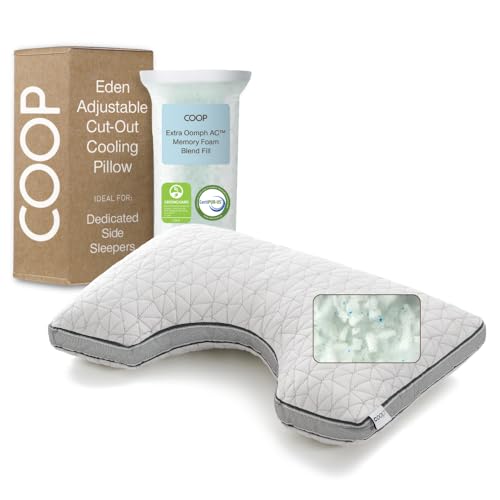
This is the softer, tunable take on the cutout idea. The ergonomic shoulder notch handles the shoulder half of the problem, while the gel memory foam and microfiber fill can be added or removed to set the neck height precisely. Running medium soft, it suits sleepers who found solid contour pillows harsh against a sore shoulder. The removable cover keeps the position-specific shape easy to maintain, and the fill carries the same CertiPUR-US and GREENGUARD Gold certifications as the wider Coop range, which helps if you are comparing within the brand.
Specs
- Gel memory foam and microfiber fill
- Ergonomic shoulder cut-out shape
- Adjustable fill level
- Medium soft feel
- Removable cover
- CertiPUR-US and GREENGUARD Gold certified
Best for: Sleepers who want a cutout with a gentler feel and room to tune the height.
Watch out for: The softness that helps the shoulder may under-support a neck that needs a firmer ridge.
ASIN: B0G2PG7WPX
Cube Memory Foam Pillow
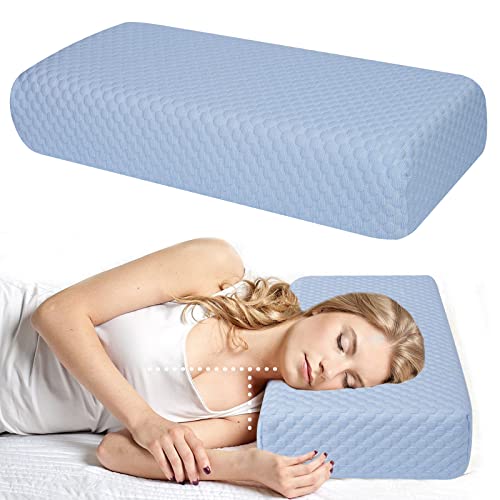
A broad shoulder needs vertical room, and the cube’s six-inch solid foam profile supplies it without a sloped edge shoving the shoulder outward. The straight sides keep a consistent gap beside the neck, so the shoulder is neither crushed nor pushed away, and the head rests on a flat, level top. That combination makes it the height-led answer in this group for larger frames. The cooling cover helps at the contact points, and a four-inch version exists in the same listing family for narrower shoulders who like the concept.
Specs
- Solid memory foam cube construction
- 24 x 12 x 6 inches, extra thick profile
- 4 inch version also listed for narrower shoulders
- Cooling cover
- Shaped for cervical positioning
Best for: Broad-shouldered sleepers whose neck pain traces back to insufficient pillow height.
Watch out for: The blocky form takes an adjustment period, and the thickness choice is critical, so measure before ordering.
ASIN: B0BPMDN3QJ
Coop Original Adjustable Pillow

The flexible fallback earns its place because combined symptoms rarely match a catalogue shape exactly. Its cross-cut memory foam and microfiber fill can be redistributed by hand: push fill toward the neck edge for support, scoop it from the shoulder corner for clearance, and use the included extra fill bag to raise the whole pillow if needed. The King size listed here gives the most material to work with. Both the Lulltra cover and the pillow itself are washable, which matters for a pillow you will be reshaping regularly.
Specs
- Cross-cut memory foam and microfiber fill
- Fully adjustable, extra fill bag included
- Medium firm, adjustable feel
- Lulltra cover, removable and washable
- Pillow itself washable
- CertiPUR-US and GREENGUARD Gold certified
- King size
Best for: Sleepers whose shoulder and neck need different fixes in different corners of the pillow.
Watch out for: Hand-shaped support drifts, so expect to re-fluff and re-tune it every few nights.
ASIN: B00EINBSJ2
Which One Fits Your Situation
Shoulder pain leads, neck stiffness follows
Start with the Eli & Elm. Its cutout removes the shoulder from the pressure path, and in many cases the neck stiffness eases once the shoulder stops being levered upward all night. The latex fill’s spring keeps the improvement consistent, because the support height does not decay as the hours pass.
Neck pain leads, shoulder is secondary
The Tempur-Pedic Ergo Neck is the deliberate choice. Its firm cervical contour prioritises the neck’s line above everything else, and the shoulder simply has to fit the profile the foam provides. Measure your shoulder width against the four-inch medium profile before committing, since the design offers no adjustment.
You have tried a contour pillow and hated it
Try the Coop Eden Cut-Out instead. It keeps the useful geometry, the shoulder notch, but replaces rigid foam with a softer, adjustable fill that forgives a sore shoulder. You trade some of the contour’s precision for comfort you can actually sleep through, which is the right trade if the last pillow ended up on the floor.
You are a large-framed sleeper
Look at the Cube Pillow first. Height is your scarcest resource, and its six-inch solid profile delivers it without tapering edges. Smaller frames should not force it; the same design in four inches exists precisely because too much loft bends the neck the other way. Measure your shoulder width before choosing between them.
Common Mistakes
- Treating neck pain and shoulder pain as separate purchases instead of one geometry problem.
- Picking a shallow decorative curve and calling it a shoulder cutout.
- Choosing firmness for the neck while ignoring what that firmness does to the shoulder joint.
- Buying a fixed contour in the wrong profile height because the size chart went unread.
- Giving up on a new shape after one night, before muscles adapt to the corrected position.
Frequently Asked Questions
Which matters more for combined pain, the cutout or the contour?
For most side sleepers the cutout matters first, because a shoulder pinned under the pillow distorts everything above it, including the neck. Once the shoulder has somewhere to go, a contour or correct height can do its work. If your shoulder genuinely never bothers you and only the neck is stiff, reverse the priority and start with a cervical contour.
How firm should a pillow be when both areas hurt?
Aim for support that holds its height under the neck, paired with some give at the shoulder edge. In practice that means medium to firm fills with resilient behaviour, like latex or quality foam blends, rather than the firmest solid block or the softest down alternative. Your louder symptom in the morning is the tiebreaker between the middle options.
Can one pillow work if I also sleep on my back sometimes?
Cutout and cube shapes are side-sleeping tools and feel wrong on the back. If you split your night between positions, an adjustable flat pillow is the safer compromise, shaped higher at the edges when you order it and re-fluffed as needed. Dedicated side sleepers get more from the specialised shapes, so the honest answer depends on your actual position split.
How long should I trial a new pillow before judging it?
Give any genuinely different shape at least a week of full nights. Muscles that have adapted to a tilted or compressed position often ache briefly when the position corrects, and adjustable fills need several rounds of tuning. Judge by the trend across the week, particularly whether morning stiffness is shrinking, rather than by the first night’s unfamiliarity.
Related guides
More from Amazon
Programs that pair well with the guide above. Offers and eligibility are set by Amazon and may change.
Free shipping on eligible items, Prime Video and more. Eligible new members can start with a free trial.
Start a Prime free trialAudiobooks and podcasts to listen to on the go. Eligible new members can start with a free trial.
Try Audible freeAd-free music streaming. Eligible new subscribers can start with a free trial.
Try Music Unlimited freeA free business account with business pricing and bulk-buying tools for work, shop or home office.
Create a business accountAs an Amazon Associate we earn from qualifying purchases.


Write Your Review
No reviews yet. Be the first to share your experience!